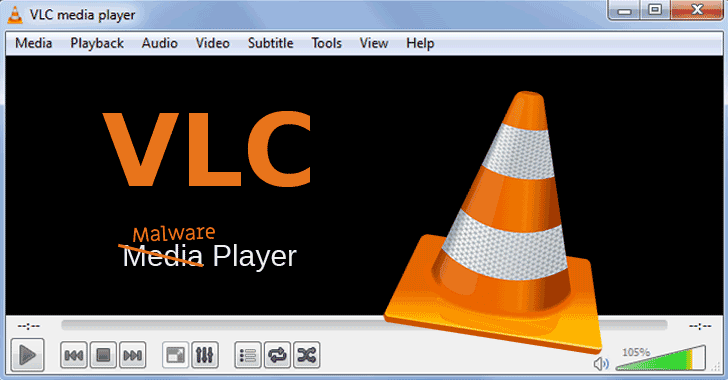
Beware! Playing Untrusted Videos On VLC Player Could Hack Your Computer

vlc media player hacking
If you use VLC media player on your computer and haven't updated it recently, don't you even dare to play any untrusted, randomly downloaded video file on it.

Doing so could allow hackers to remotely take full control over your computer system.

That's because VLC media player software versions prior to 3.0.7 contain two high-risk security vulnerabilities, besides many other medium- and low-severity security flaws, that could potentially lead to arbitrary code execution attacks.

With more than 3 billion downloads, VLC is a hugely popular open-source media player software that is currently being used by hundreds of millions of users worldwide on all major platforms, including Windows, macOS, Linux, as well as Android and iOS mobile platforms.

Discovered by Symeon Paraschoudis from Pen Test Partners and identified as CVE-2019-12874, the first high-severity vulnerability is a double-free issue which resides in "zlib_decompress_extra" function of VideoLAN VLC player and gets triggered when it parses a malformed MKV file type within the Matroska demuxer.

The second high-risk flaw, identified as CVE-2019-5439 and discovered by another researcher, is a read-buffer overflow issue that resides in "ReadFrame" function and can be triggered using a malformed AVI video file.

vlc media player vulnerabilities

Though the proof-of-concepts demonstrated by both researchers cause a crash, a potential attacker can exploit these vulnerabilities to achieve arbitrary code execution with the same privileges as of the target user on the system.

All the attacker needs to do is craft a malicious MKV or AVI video file and trick users into playing it using the vulnerable versions of VLC.

Well, that's not a tough job, as attackers can easily target hundreds of thousands of users within hours by simply releasing malicious video files on torrent sites, mimicking as a pirated copy of a newly released movie or TV series.

According to an advisory released by VideoLAN, having ASLR and DEP protections enabled on the system could help users mitigate the threat, but developers did admit that these protections could be bypassed too.

Paraschoudis used honggfuzz fuzzing tool to discover this issue and four other bugs, which were also patched by the VideoLAN team earlier this month along with 28 other bugs reported by other security researchers through EU-FOSSA bug bounty program.

Users are highly recommended to update their media player software to VLC 3.0.7 or later versions and should avoid opening or playing video files from untrusted third parties.

Comments

Popular posts from this blog

Be fraud aware - What are phishing, smishing and vishing.

  You may have heard the terms phishing, smishing or vishing before, but what exactly do they mean? At their core, all three terms are a type of financial fraud which tricks unsuspecting victims into giving out sensitive personal information, handing over money or installing malware onto their device. The only difference between each term is the channel via which you can be targeted; phishing refers to scam emails, smishing refers to scam text or WhatsApp messages and vishing takes place over the phone. Phishing The most common phishing method encourages victims to visit a malicious website through a fake email message, which appears to be sent from a legitimate company or source (e.g. from a bank, HMRC, a delivery company or the NHS). For example, you might receive an email which appears to be from an organisation who you’re familiar with, asking you to click on a link. At this point you will be taken to a webpage on which you’re asked to submit sensitive data, such as passwords, ...

How Cybersecurity Enables Government, Health, EduTech Cope With COVID-19

The advent of the Covid-19 pandemic and the impact on our society has resulted in many dramatic changes to how people are traveling, interacting with each other, and collaborating at work. There are several trends taking place as a consequence of the outbreak, which has only continued to heighten the need for the tightest possible cybersecurity. Tools for Collaboration There has been a massive spike in the adoption of Tools for Collaboration as a consequence of COVID-19. Concerns about the coronavirus have caused an enormous increase in remote working, with many organizations requiring or at least encouraging their workers to stay at home—especially when cities, states, and even some entire nations are ultimately into lock down in a bid to spread the stem of the disease. Meanwhile, with millions working from home for many weeks now, there has been a spike in the video conferencing and online collaboration software, many of which are fortunately entirely free, allowing organizations...

March – Threat Intelligence Bulletin

Top Attacks and Breaches Global fear of the Corona virus epidemic continues to be exploited for malicious cyber operations. Check Point Research  reports  of thousands of newly registered coronavirus related domains, which are 50% more likely malicious than other domains. CPR also informed of a Trickbot campaign using a fake health warning document to target Italian users. Colorado based space and defense parts manufacturer, Visser Precision, has fallen victim to a DoppelPaymer  ransomware  Information stolen from Visser and its customers, including Tesla, Lockheed Martin, SpaceX and Boeing, has been published online in  another  attempt to extort ransom payment. An unidentified demographic and financial information database, hosted on Google cloud, has been left  unsecured  for more than a month. Containing over 200 million records, the exposed information included name, address, email address, credit rating, income, net worth property ...